


Custom web and mobile applications for SMEs in French-speaking Switzerland
Web and mobile development: build a useful application, not another interface
A web and mobile development page should not only promise an iOS or Android app. The real need is often more concrete: centralizing requests, replacing spreadsheets, automating approvals, connecting a CRM or giving field teams a reliable tool.
We support SMEs across French-speaking Switzerland with clear scoping: web app, client portal, business software, mobile application, application redesign, API, automation and maintenance. Typical projects include a business web app in Lausanne, a client portal in Geneva, a CRM-connected sales tool in Nyon, an SME back office in Vevey or a field application for teams active between Montreux, Fribourg and Neuchâtel.
The goal is to decide quickly what deserves development, what can be automated, what should stay simple and how to ship a usable MVP before building a product that is too wide.
- Business scoping before technical choices
- Clickable prototype to validate screens and roles
- Web, mobile, API and automation for SMEs in Lausanne, Geneva, Vevey and Nyon
- Maintenance, security, Swiss hosting and future iterations planned early
Product architecture
Usable MVP
Portal, back-office and API scoped before development.
Rights, data and reporting in one foundation.
Client · Vevey
Field ticket #1842
Offline mode accepted · data pushed back to CRM
What budget should you plan for a web app or business tool?
A custom application is not priced like a showcase website. Budget depends on roles, screens, data, integrations, security and expected maintenance.
- Scope, main journey and prototype
- Responsive or focused mobile interface
- Users, roles and key data foundation
- Production release and first feedback loop
- Full workflow and business rules
- API, CRM, ERP or existing tools connected
- Dashboards, exports and notifications
- Testing, security and handover documentation
- Code, UX, data and risk audit
- Progressive migration plan
- Fixes, stabilization or maintenance takeover
- Prioritized product roadmap
Scoping avoids vague quotes: we separate the MVP, useful automations, critical integrations and evolutions that can wait.
Web app, mobile, business software and application redesign
The page stays generic, but the intents are precise: build an internal tool, launch an MVP, connect systems or recover an existing application without multiplying local pages.
Custom web app to centralize requests, data and access
A web app fits when the tool must work everywhere, stay maintainable and centralize roles: internal team, customer, partner, administrator or management.
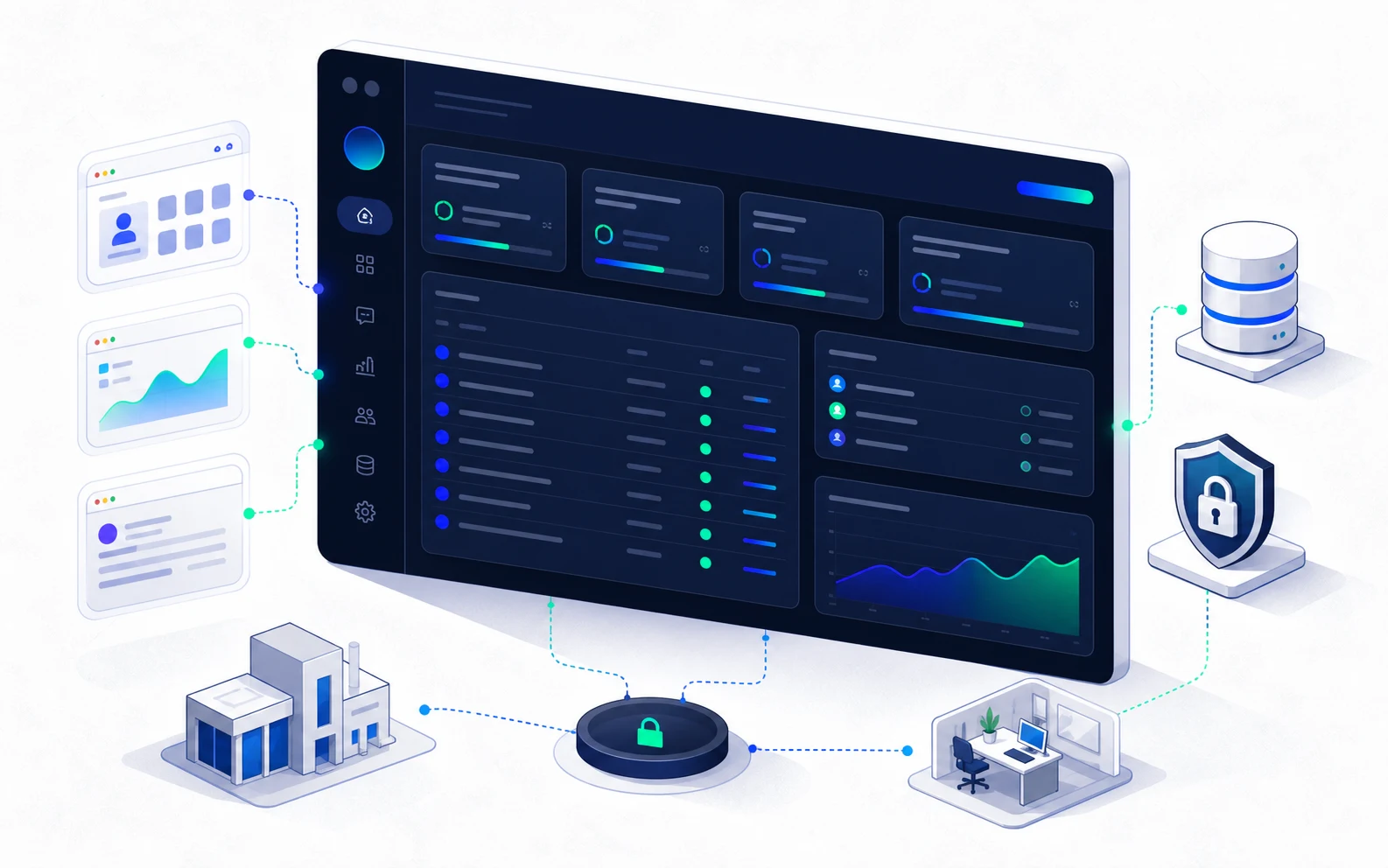
It can become a client portal, extranet, back office, document area, approval workflow, dashboard or operational tracking tool.
Local intents stay natural: a B2B portal in Lausanne, a service interface in Geneva, a sales tool in Nyon or a back office for a Vevey SME do not need separate pages to make sense.
When to choose a web app:
- Secure role-based access and clear user journeys.
- Centralized data with filters, statuses, exports and notifications.
- Maintainable technical base for post-MVP modules.
- Responsive interface usable on desktop, tablet and mobile.
Mobile application for field teams, customers or recurring operations
A mobile app makes sense when the phone creates real value: field input, photos, QR code, notifications, geolocation, off-desk usage or frequent customer interaction.
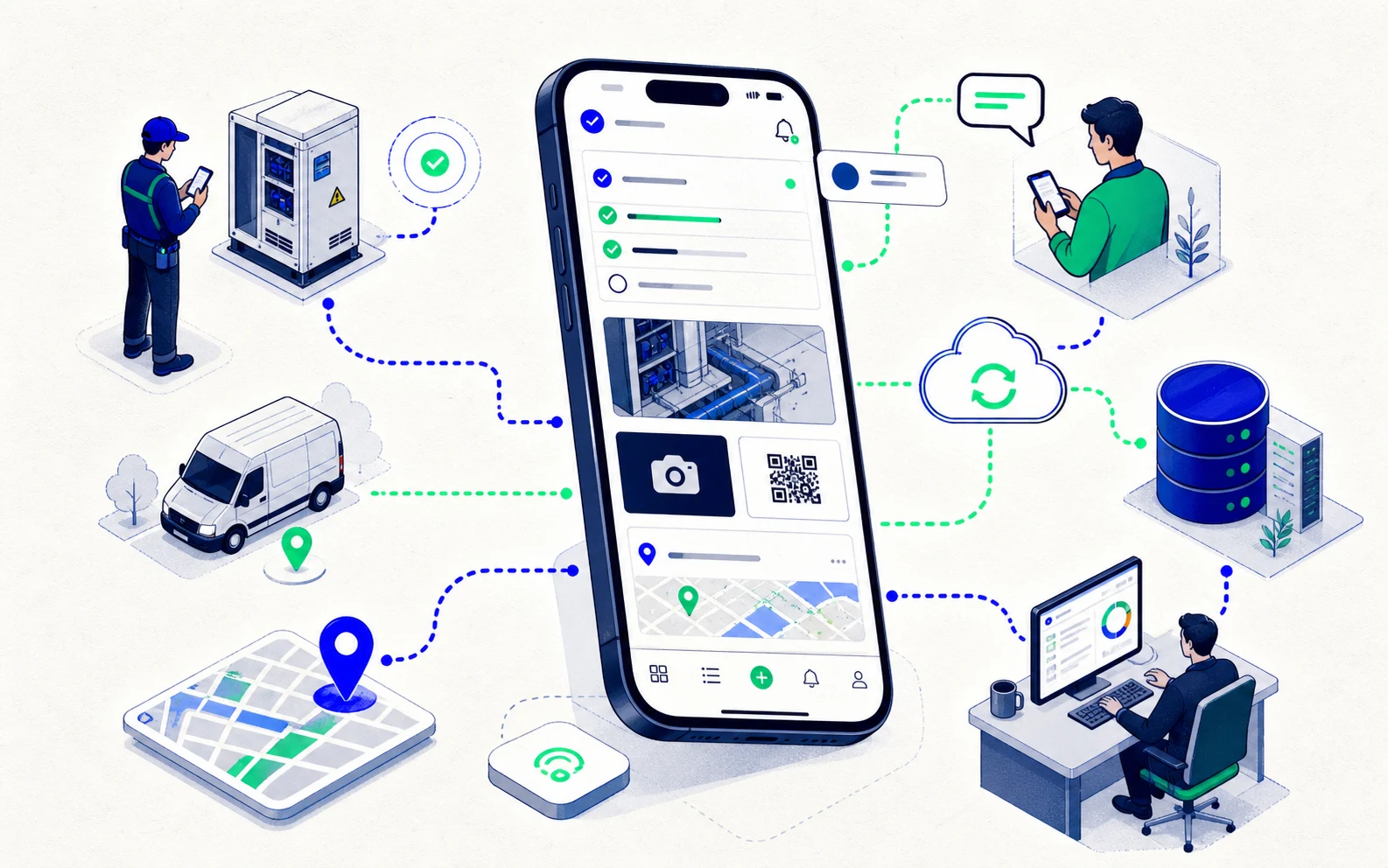
Development can start as a mobile MVP, PWA or native app depending on publishing, performance, hardware and budget constraints.
Swiss use cases distribute naturally: Riviera interventions, Geneva customer relationship, Lausanne sales tracking, Fribourg team coordination or technical operations in Neuchatel.
When mobile becomes useful:
- Mobile screens prototyped before full development.
- Short input flows to reduce field errors.
- Notifications, media, statuses and sync scoped to the real need.
- Publishing, tests and maintenance framed in the quote.
Business software to replace scattered files and recurring manual work
Business software helps when standard tools force the team to work around the real process: duplicate entries, sensitive spreadsheets, email approvals, manual exports or lack of visibility.
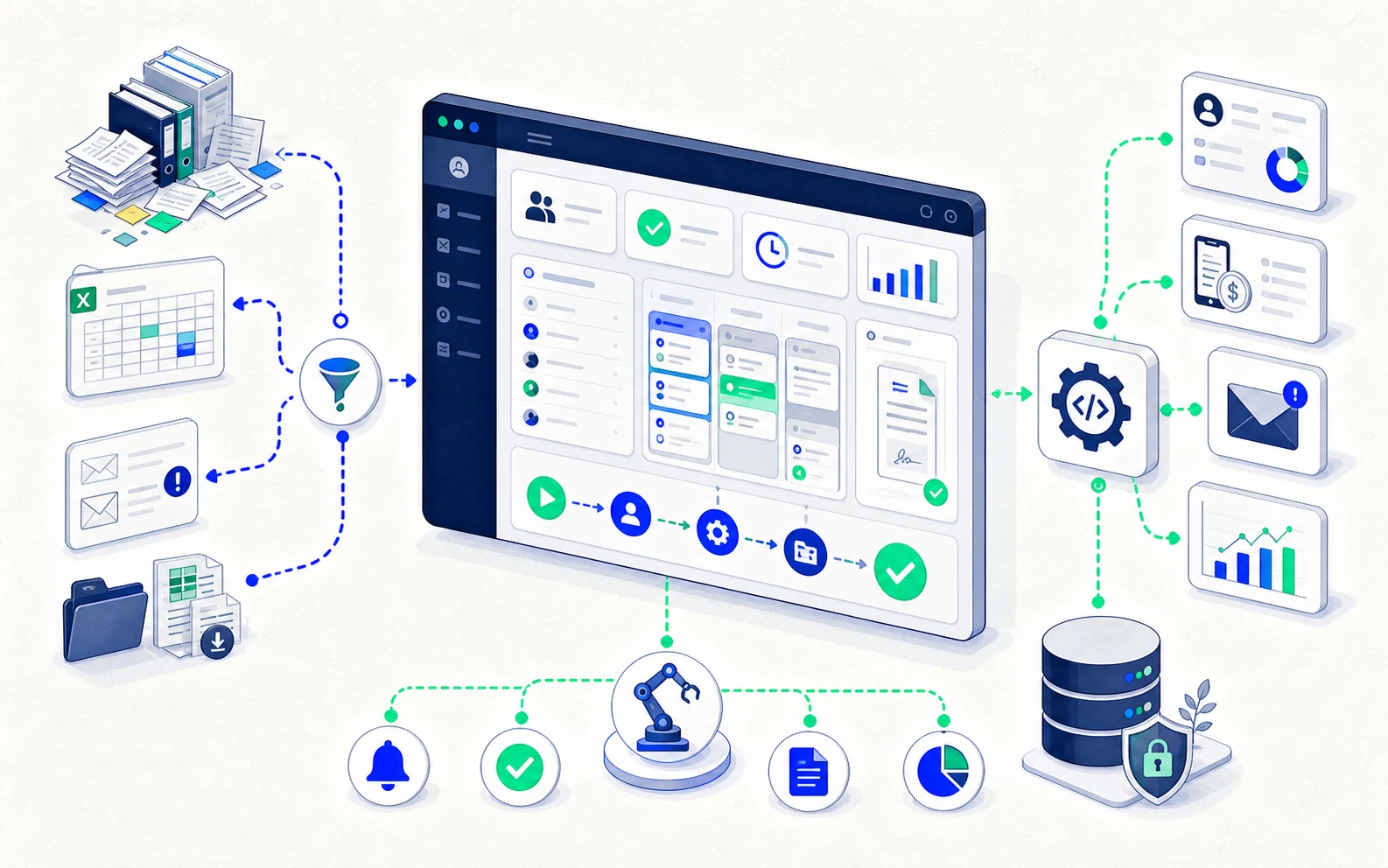
Development starts with the workflow: what data enters, who approves, where information goes out, what integrations are needed and which steps can be automated.
The page keeps cities as contextual signals: administrative automation in Lausanne, service portal in Geneva, operations tracking in Montreux or technical tooling for a Neuchatel SME.
What business software clarifies:
- Roles, data, approvals and exceptions mapped first.
- API, CRM, ERP, email or existing tools connected.
- Measurable automations without building an oversized platform.
- Maintenance and continuous improvement after launch.
Application redesign to stabilize an existing tool without losing usage
Application redesign is useful when a tool already exists but slows the team down: performance, bugs, dated UI, vendor dependency, technical debt or missing documentation.
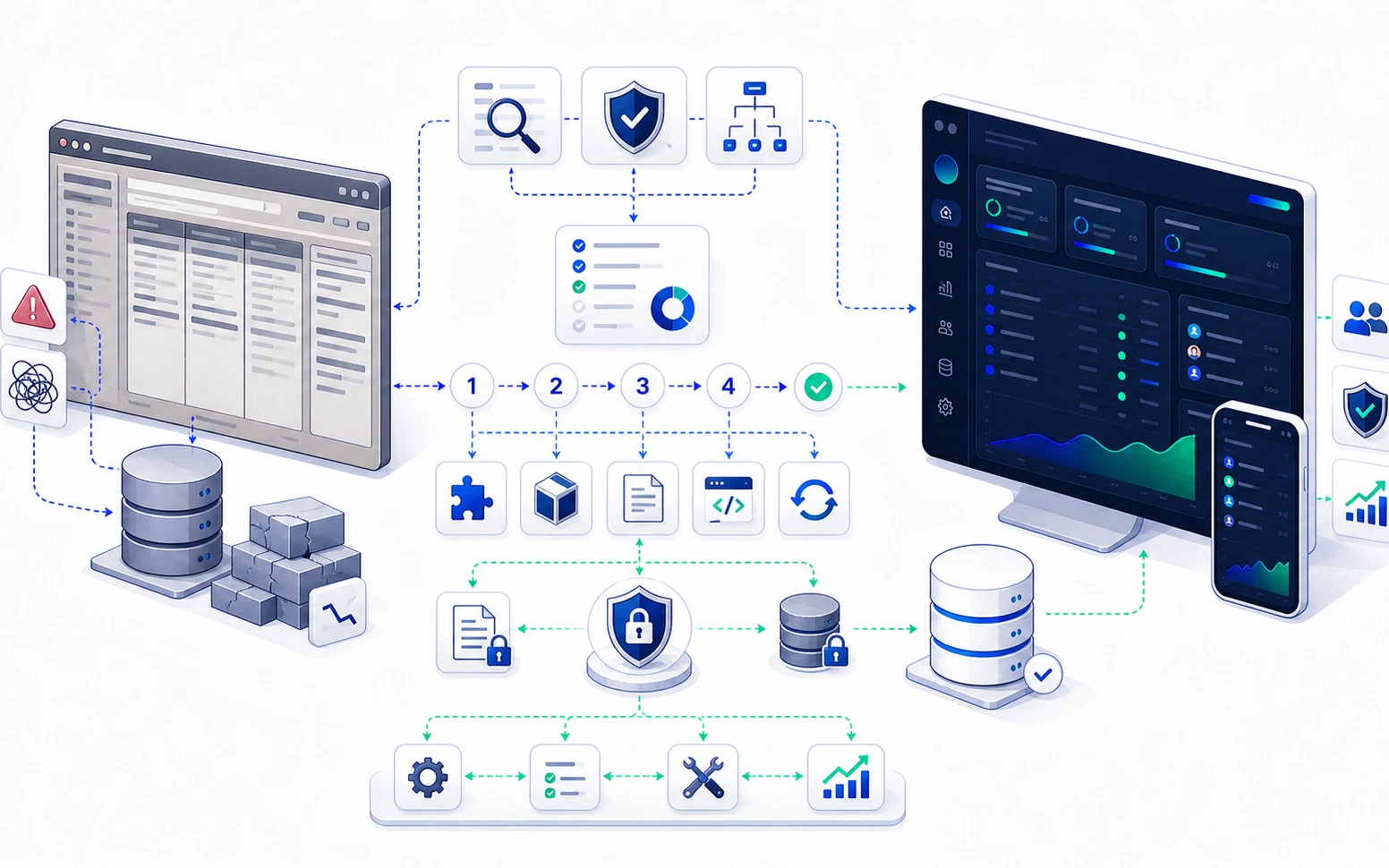
Good scoping avoids rewriting blindly. We identify critical usage, data to protect, integrations, modules to keep and areas to rebuild progressively.
This approach supports SMEs with an internal tool in Vevey, Nyon, Fribourg, Geneva, Lausanne, Montreux or Neuchatel that need reliability without stopping activity.
Redesign without breaking operations:
- Technical, functional and security audit of the existing system.
- Step-by-step migration plan based on business priorities.
- New UX, clean APIs and usable documentation.
- Maintenance takeover when the product must keep evolving.
- 01
Business scoping and operational priorities
We identify roles, data, bottlenecks, approvals, existing tools and expected gains before choosing web app, mobile, business software or simple automation.
- 02
Journey mapping and clickable prototype
Critical screens are designed before code: dashboard, forms, statuses, notifications, client access, field mode or back office depending on the project.
- 03
Technical architecture, security and data
We define hosting, roles, backups, permissions, APIs, integrations, data protection and sensitive information handling to avoid a fragile MVP.
- 04
Development in short deliverable batches
The project progresses through testable modules: authentication, core workflow, data, interface, integrations, exports and priority automations.
- 05
Tests with real users
Feedback from teams, customers or field operators helps correct screens, reduce friction and prioritize adjustments before launch.
- 06
Production release, monitoring and documentation
Launch includes responsive checks, logs, backups, monitoring, handover documentation, admin access and rollback planning when needed.
- 07
Maintenance and evolution from usage data
After launch, improvements follow real usage: new integrations, automations, performance, security, support and prioritized roadmap.
A technical partner to scope, ship and maintain
Custom development rarely fails because of code alone. It fails when the need is poorly scoped, the MVP too large, data misunderstood or maintenance forgotten.
Scoping before technology
React Native, Astro, Laravel, Node.js, APIs or automation are chosen only after the workflow, constraints and budget are clear.
One tool, usage adapted to Swiss teams
We work with SMEs across French-speaking Switzerland, describing concrete situations: a client portal in Geneva, back office in Lausanne, field application on the Riviera, sales tracking in Nyon, coordination in Fribourg or technical operations in Neuchâtel. Local examples locate real usage rather than multiplying pages.
Maintenance included in the thinking
Backups, monitoring, security, iterations, documentation and maintenance takeover are framed before production.
Key questions before launching a custom application
These answers help decide whether the need is a web app, mobile app, business software, automation or application redesign.
Scope an application that is actually worth building
We verify the need, users, data, integrations, budget and first useful MVP before starting development.
- MVP scoped before final quote
- Maintenance available after launch
- French-speaking Switzerland, Swiss hosting, clear access